Why Mums of the Hills has been advocating for mothers in climate planning, and how you could help shape what happens next.
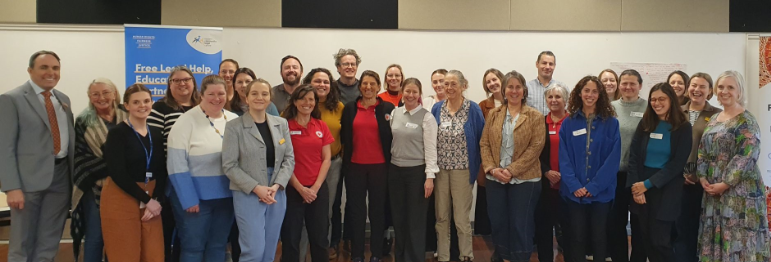
In October, after more than two years of conversations, workshops, research and collaboration, the Yarra Ranges Climate Partnership launched its Collaborative Action Plan. Mums of the Hills (MOTHs) has been involved since the beginning, helping ensure that the experiences, needs and perspectives of mums and families are considered in decisions about how our region prepares for, responds to and recovers from climate-related disasters.
You might be wondering why an organisation dedicated to reducing social isolation among mums has been involved in developing a climate action plan. We work to ensure that mums have access to information, support, meaningful connections and opportunities to have their voices heard. When you consider how climate-related disasters affect families, and particularly those already experiencing financial hardship, caring responsibilities or social isolation, the connection becomes much clearer.
Our involvement has also been about something bigger than representing mothers. Throughout the partnership, we've contributed to discussions about the important role grassroots community organisations play in building resilience, and the challenges they face when they're expected to do more without the resources to support that work. It's an issue I raised early in the project and one that resonated with others involved.
With the plan now launched, we're turning our attention to what happens next. We're exploring how MOTHs might contribute to its implementation, whether that’s through practical community activities, partnerships or continued advocacy. We're also considering establishing a small working group in the new year, giving interested members an opportunity to help shape our involvement.
Before we get to that, though, it's worth exploring why the connections we build through MOTHs matter so much when it comes to climate resilience.
So… what does knowing your neighbours have to do with climate change?
Quite a lot, as it turns out.
Here’s a hypothetical situation for you: There's a storm coming, you've charged your phone, checked the torches, brought the outdoor furniture inside and made sure there's enough milk in the fridge. If you're particularly organised, you've even located that battery-powered radio you bought after the last big storm.
The power goes out, the mobile network stops working, a tree comes down across the road and the kids want to know why the Wi-Fi isn't working. Suddenly, the contents of your emergency kit are looking a little inadequate.
Fortunately, you live in the hills, an area well known for being awesome during disasters like these. So, your neighbour checks whether you're okay and in chatting with them, you find out that someone down the road has a spare generator. Upon chatting to them (aka generator Gerry), you find out that a mum (a MOTH) up the road has offered to collect medication for an elderly resident, while the rest of the street have organised a chainsaw party to sort out that tree across the road (because, of course, this is the Hills and they’re the kind of parties we rock).
Meanwhile unbeknownst to you, an eclipse of MOTHs members outside the affected area are organising hot meals, offering freezer and fridge space and hot showers. How do you find out? You know that mum who collected medication got talking to the pharmacist and the other mum in the line at pharmacist (both MOTHs) who passed on the information and know a suitable drop off spot for said meals.
We've seen this sort of thing happen many times across the Dandenong Ranges. When things go wrong, people often step up in extraordinary ways. A big worry I have though is this…. What happens when you don't know your neighbours, you're new to the area, you're parenting alone or you don't have the resources to manage an unexpected emergency?
For more than a decade, MOTHs has been bringing mums together, creating opportunities for friendship, sharing information and helping people feel less alone. On the surface, this might not sound like climate action, but research suggests that the connections we build during ordinary times can make an important difference during extraordinary ones.
Researchers call this social capital - the resources we can access through our relationships, social networks and the trust we develop with one another. Although not entirely an equivalent (or even correct interpretation), I still prefer to remember it like this:
M – Mates
O – Offering
T – Time,
H – Help and
S – Support.
Back to social capital, Aldrich and Meyer (2015) examined the role of social capital in disaster resilience and found that social networks are important to survival and recovery. Their research challenges approaches that concentrate primarily on physical infrastructure, highlighting the value of the relationships and organisations that connect communities.
It's an interesting way to think about the work of MOTHs. The friendship formed at a book club, the local knowledge shared in our Facebook group or the mother who discovers she's not the only one struggling with a particular challenge might seem like small moments. Yet these connections can become pathways to information, practical assistance and emotional support when circumstances change.
As MOTHs already has a community where thousands of women exchange information, ask questions and share experiences, how might we use those connections to help families become better prepared?
Same storm. Very different consequences.
Here’s another scenario: Imagine two families living on the same road. One owns their home, has comprehensive insurance, savings, flexible employment and relatives nearby. The other rents, has three young children, limited savings, no family nearby and a job that doesn't pay when they can't get to work. The same tree falls across their road, but the consequences for those families could be vastly different.
This is at the heart of climate justice: recognising that the impacts of climate change are not experienced equally, and that existing social and economic inequalities can influence people's ability to prepare for, respond to and recover from disasters. For mums and families, there are additional considerations.
Australian researchers Pascoe Leahy and Gay (2023) examined parents' experiences of Cyclone Tracy, the 2011 Queensland floods and the 2019–20 Black Summer bushfires. Drawing on oral histories, they found that caring for children creates additional responsibilities during disasters, and that these experiences have been shaped by gender roles over time. Their research also explores how environmental risks are influencing parenting decisions, including where families choose to live, how they prepare for emergencies and how they think about their children's future.
Want to know more about this, (slightly concerning/uncomfortable) reality? A broader systematic review by Anjum and Aziz (2025) similarly identified the ways climate change can compound existing gender inequalities, including through caring responsibilities, mental health pressures and unequal access to resources. Although much of the evidence reviewed came from low- and middle-income countries, it reinforces the importance of considering gender and social circumstances when developing climate responses.
We know, not just from the private posts we read every day, but from our recent survey, that many mum are already navigating significant pressures in their everyday lives. Over the years, our community surveys have consistently highlighted concerns about financial hardship, social isolation and access to support.
So when we talk about disaster preparedness, we need to consider more than whether households know what to put in an emergency kit. We also need to ask whether they have the financial, practical and social resources to act on that knowledge.
So, why has MOTHs been involved in a climate partnership?
Since the beginning of the Yarra Ranges Climate Partnership in 2024, MOTHs has been involved in conversations about how our region can better prepare for, respond to and recover from climate-related disasters.
Led by Eastern Community Legal Centre (ECLC), the partnership brings together almost 50 community service organisations. Over the past two years, we've participated in a collaborative process examining the challenges facing our communities, the relationships between organisations and the opportunities to work more effectively together.
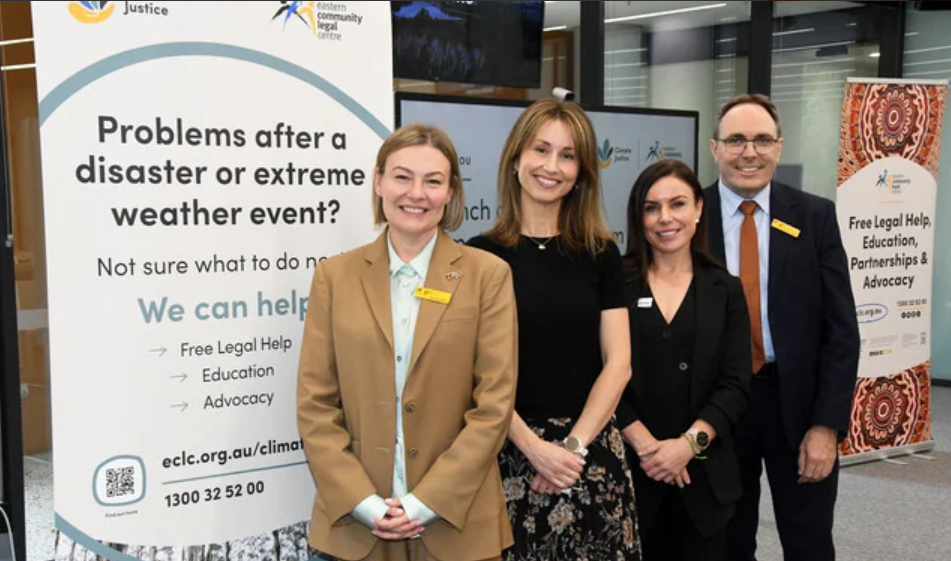
ECLC chief principal, Donna Askew, Sanja Nenadic, Yarra Ranges Council manager, Corinne Bowen and ECLC chief officer, Michael Smith. Image Credit: ECLC
In October 2026, this work reached an important milestone with the launch of the Yarra Ranges Climate Partnership Collaborative Action Plan. The plan identifies five areas for action: connected services, community resilience, organisational readiness, sustainable funding, and rights and advocacy.
One of the recurring themes throughout the partnership was the challenge facing smaller, grassroots community organisations. We’ve long recognised that grassroots volunteer lead organisations are essential to building community resilience, but we risk placing even greater expectations on organisations that are already stretched. If we genuinely value their contribution, we also need to recognise and resource the time, expertise and organisational capacity required to participate. This will be particularly important as the Collaborative Action Plan moves from planning into action.
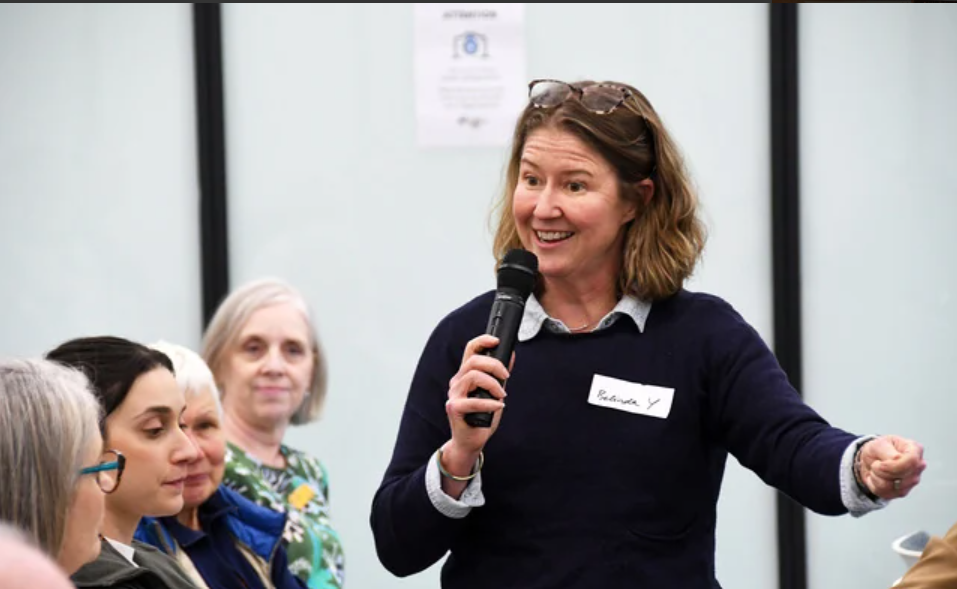
MOTHs President, Belinda Young, speaks about the value of the Climate Partnership project. Image credit ECLC.
For MOTHs, participating in the partnership has been an opportunity to bring the experiences of mums and families into conversations that might otherwise overlook them. It's also helped us connect with organisations that have expertise in areas where our community needs support. Working collaboratively allows us to connect the experiences of local families with organisations that can help address these broader issues.
Next Stage: Working Groups
The launch of the Collaborative Action Plan marks the beginning of a new stage, and we're keen to explore what this could mean for MOTHs and the families we support.
We've already been working with ECLC on insurance education (next event on Friday, 13th November) and advocacy, and we're interested in creating more opportunities for practical conversations about bushfire and storm preparedness. After all, an evening involving wine, cheese and a conversation about bushfire planning might be a more appealing starting point than another frightening reminder about what could go wrong. However, we think there's potential to do more.
We're interested in exploring where MOTHs can make the greatest contribution to the Collaborative Action Plan, potentially establishing a small MOTHs working group in the new year to help explore these possibilities. We'd love to hear from people interested in contributing. Some opportunities might involve practical activities within our community, while others might be better addressed through research, partnerships and advocacy. We're considering it all.
You might have professional experience in emergency management, community development, insurance, health, communications or research. Perhaps you've lived through a major storm or bushfire and have lessons you'd like to share. You might have an idea for a project, enjoy bringing people together or simply be interested in helping make our community better prepared.
We're not expecting everyone to join a committee or take on an enormous volunteer commitment. We want to find ways for people to contribute that recognise their interests, experience and available time.
What could we achieve together?
One of the things I've learned through my research and my years with MOTHs is that community connection isn't something we can simply switch on when an emergency occurs. It takes time to build relationships, develop trust and create environments where people feel comfortable asking questions, sharing knowledge or offering help. It also takes more than goodwill. Strong communities need accessible services, appropriate resources, supportive policies and opportunities to participate in decisions that affect them.
That's why I'm pleased MOTHs has been part of the Yarra Ranges Climate Partnership from the beginning, and why I think the next stage offers some interesting opportunities for our community.
We live in an extraordinary part of the world, surrounded by beautiful forests and communities that have repeatedly demonstrated their willingness to help one another through difficult times. The challenge now is to build on those strengths while addressing the gaps that leave some households more vulnerable than others.
If you'd like to help shape what MOTHs does next, we'd love to hear from you. To express your interest in being involved in MOTHs' climate resilience activities, please contact us or respond to our invitation for volunteers in the new year.
References for further reading
Aldrich, D. P., & Meyer, M. A. (2015). Social capital and community resilience. American Behavioral Scientist, 59(2), 254–269. DOI: 10.1177/0002764214550299
Anjum, G., & Aziz, M. (2025). Climate change and gendered vulnerability: A systematic review of women's health. Women's Health, 21. DOI: 10.1177/17455057251323645
Pascoe Leahy, C., & Gay, C. (2023). Care and crisis: Disaster experiences of Australian parents since 1974. The History of the Family. DOI: 10.1080/1081602X.2023.2278161
Paton, D. (2019). Disaster risk reduction: Psychological perspectives on preparedness. Australian Journal of Psychology, 71(4), 327–341. DOI: 10.1111/ajpy.12237
Eastern Community Legal Centre. (2026). Yarra Ranges Climate Partnership: About the Project. https://eclc.org.au/what-we-do/partnerships-and-projects/climatejustice/yrcp/about/