
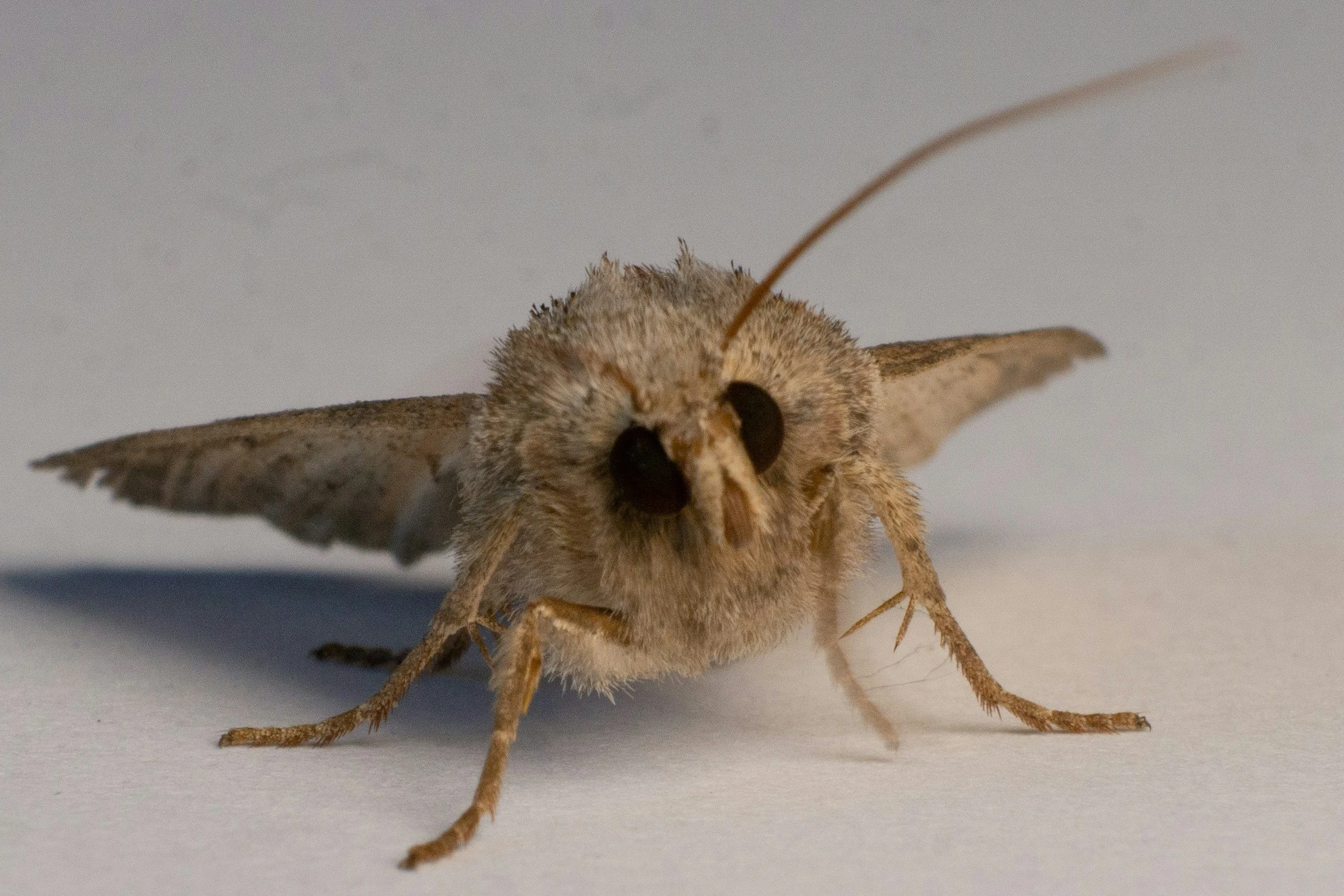
What bogong moths and mums have in common (it's more than you might think).
With so much sadness, anxiety and uncertainty in the world lately, I thought it was time to share a good news story. This story is about something small, slightly furry, frequently misunderstood and remarkably resilient. Yes, I'm talking, of course, about bogong moths.
If you've ever looked closely at the Mums of the Hills logo, you'll know that our official mascot is a moth. It seemed appropriate given our acronym MOTHs, although I suspect few of us appreciated just how much we might have in common with these extraordinary little creatures. As it turns out, quite a lot.
But first, let’s talk about some rather wonderful news. They're back!
After years of devastating population declines, bogong moths have made a spectacular return to eastern Australia this spring. Once numbering in the billions, their populations began declining decades ago before crashing dramatically in 2017. For several years, their numbers were so low that they were virtually absent from their traditional alpine summer habitats. The situation became so serious that the bogong moth was listed as endangered in 2021.
Then, this spring, something remarkable happened. Bogong moths started appearing in extraordinary numbers across eastern Australia, including Melbourne. Citizen scientists have been recording sightings, and the results suggest a remarkable resurgence.
We don't yet know whether this represents a sustained recovery, but after years of worrying news, it's certainly something worth celebrating.
You can read about their remarkable comeback in The Guardian's October 2026 article. Naturally, this got me thinking about our little MOTHs community and the surprising similarities between moths and mums.
A mother's work is never done. Neither is a moth's.
Bogong moths are famous for their extraordinary migrations, travelling hundreds of kilometres from their breeding grounds to the Australian Alps, where they spend the summer sheltering in cool caves and rocky crevices.
It's a remarkable journey for such a small creature, although I suspect any mum who has negotiated a supermarket trip with a toddler, a baby and a trolley with a dodgy wheel might feel she deserves similar recognition.
Moths are generally most active at night, although many species are active during the day too. Mums, of course, have perfected the art of functioning across both shifts, often with little warning about when one ends and the other begins.
Then there's the eating. Some adult moth species don't have functional mouths. They live entirely on the energy accumulated during their caterpillar stage, devoting their brief adult lives to reproduction rather than stopping for a meal. Bogong moths aren't among these species. They do feed as adults, building up the energy reserves needed for their remarkable migrations.
Nevertheless, the comparison made me laugh. When my children were little, I don't recall ever making myself lunch. I survived on uneaten crusts from sandwiches, half-eaten bananas and whatever was left on someone's plate. Occasionally, if I was lucky, I'd manage a cup of tea only being reheated the once.
Somehow, everyone else was fed, dressed and reasonably presentable while I wandered around wondering whether three crackers and the remains of a cheese stick constituted a balanced diet. Perhaps moths and mothers aren't so different after all.
Small creatures. Enormous responsibilities.
Here's where the story gets particularly interesting. Bogong moths aren't just fascinating little travellers. They're an important part of Australia's alpine ecosystems, providing food for other animals, including the critically endangered mountain pygmy possum.
When bogong moth populations collapsed, the consequences extended far beyond the moths themselves. Animals that depended on them lost a vital food source. Their disappearance demonstrated just how much an entire ecosystem can depend on something most of us barely notice.
Sound familiar?
Anyone who has ever left the house for a few hours, leaving the family to fend for themselves, will appreciate this particular ecological phenomenon. You return to discover that nobody knows where the clean socks are, someone has eaten the ingredients intended for dinner, there's a mysterious sticky substance on the kitchen bench and the dog has somehow acquired a second breakfast. In some households, the entire domestic ecosystem appears to teeter on the brink of collapse the moment Mum disappears.
Of course, I'm exaggerating (slightly), and families come in all shapes and sizes, with caring responsibilities shared in different ways. But there's a serious point hiding beneath the pile of washing.
We often fail to recognise the importance of something until it's no longer there. For bogong moths, their disappearance exposed just how essential they were to the survival of other species. For mums, the enormous amount of physical, emotional and organisational work involved in caring for others can be similarly invisible.
The difference is that, unlike the moths, we can actually ask someone else to make dinner. Whether they know where the saucepan lives is another matter entirely.
Our season of caring is short…and extraordinarily long.
The adult life of a bogong moth is relatively brief, but within that time it undertakes an extraordinary journey and contributes to the survival of another generation. Motherhood operates on a rather different timescale, although sometimes it feels equally fleeting.
Those years of babies, toddlers, school lunches, lost shoes and bedtime stories can seem endless when you're in the middle of them. Yet somehow, before you know it, the children who once cried when you cut their sandwhiches into squares not triangles (oh the tragedy) are now making their own lunches.
Sometimes they even clean up afterwards…well… I'm told this happens.
The intense, hands-on season of caring for young children is relatively short, although motherhood itself continues to change and evolve throughout our lives. We move from being needed constantly to being needed differently, and somewhere along the way, we rediscover parts of ourselves that may have been quietly waiting in the background.
Perhaps that's another reason I like our moth mascot. It reminds me that life is full of different seasons, each with its own challenges, responsibilities and opportunities.
Even the strongest creatures need the right conditions to thrive.
The bogong moth's comeback is wonderful news, but it doesn't mean the species is out of danger. Drought, climate change, pesticides and artificial light have all been identified as threats to these remarkable insects. Their survival depends on conditions that allow them to complete their extraordinary life cycle.
Resilience, it turns out, isn't simply about being tough enough to survive whatever life throws at you. It's also about having the conditions and support you need to thrive. That's something we've been talking about at MOTHs for more than a decade.
Mums are extraordinarily resourceful, capable and resilient, but that doesn't mean they should be expected to manage everything alone. We need friendships, practical support, opportunities to connect and communities that recognise the importance of caring for those who care for others.
Just as the disappearance of bogong moths affects an entire ecosystem, the wellbeing of mothers has consequences that extend far beyond the individual. When mothers are supported, families and communities benefit too. It's one of the reasons MOTHs exists.
There's something rather lovely about the return of the bogong moths. After years of decline, these small, unassuming creatures are once again making their way across the country, reminding us that recovery is possible, that nature can surprise us and that even the smallest members of an ecosystem have an important role to play. Perhaps that's the message I want to celebrate most.
We don't always recognise our own contributions, particularly when so much of what we do happens quietly, behind the scenes and without much fanfare. We can become so busy looking after everyone else that we forget the importance of looking after ourselves and each other.
So, as our little bogong moths make their remarkable return, I think it's worth raising a cup of tea to them.
Preferably one that's still hot.
Here's to the bogong moths, to the mothers who share their name, and to the extraordinary things that happen when we give each other the support we need to thrive.
Long live the MOTHs!