
Come as you are
My body story and why our pool event this Saturday at Olinda Pool is so important to me.
I didn’t grow up hating my body.
That feels important to say, because what I remember isn’t loud self-loathing or constant insecurity. What I remember is quieter. A set of rules absorbed early and rarely questioned.
I was a dedicated dancer — ballet, modern, highland. Dance shaped how I moved through the world and how I understood my body. Discipline was praised. Control was admired. Lightness was rewarded.
One phrase in particular stuck.
“When you sit, you spread.”
It was said casually in the lead-up to Easter. Ballet exams followed shortly after the break, which meant Easter chocolate came with consequences. Eat the wrong things, gain the wrong weight, and you could fail your exams. Not because you couldn’t dance, but because your body no longer fit the expected shape. It wasn’t framed as cruelty. It was framed as discipline. As preparation. As something serious dancers simply understood.
At home, I watched my mum closely. Not out of judgement, but vigilance. I worried about how much oil went into food, how small choices might quietly add up. No one told me to fear food, yet the message was there all the same.
Dance also exposed me to the sharper edges. I watched fellow dancers starve. I watched gums decay. I watched teeth fall out. Bodies pay their debts eventually, even when the cost is hidden for a while.
I never starved myself. I loved food. I still do. What sat alongside that enjoyment though, was constant, learned, rarely questioned caution.
If I were given something sweet to eat, I would run around the house while eating it, as if the sugar could be burned off immediately rather than absorbed by my body. It wasn’t frantic. In my mind, it felt sensible and a way of proving responsibility in real time.
Because when you sit, you spread.
Those ideas don’t disappear when the exams end. They sit quietly in the background, shaping how you relate to your body long after the leotards are packed away. Enjoyment comes with conditions. Celebration needs offsetting. Bodies require monitoring, just in case they slip.
I still remember the first time I bought a Mars Bar with my own money. I walked up to the counter fully conscious of what I was doing, as though I were making a declaration rather than a purchase. In my head, it carried the weight of six months of sugar and something close to a Volkswagen.
I was twenty-six.
That detail matters. This wasn’t a child sneaking a treat or a teenager rebelling. It was an adult woman, financially independent, still negotiating permission to eat a single chocolate bar without consequence.
By the time motherhood arrived, those instincts were well practised. Monitoring felt normal. Correcting felt responsible. Stillness felt risky.
After my first son was born, I moved quickly back into exercise, determined to “get my body back” without stopping to question what that phrase implied. My body responded by popping a rib out — a fairly clear signal that it had already done something extraordinary and needed care, not correction.
Motherhood has a way of resurfacing old rules you didn’t realise you were still living by. The ones about worth, restraint, visibility and space. The ones absorbed so early they feel like instinct. I’m still mindful of my food. That hasn’t disappeared, but it has softened. It now feels more like awareness than fear. Exercise has shifted too. These days I love it for the buzz, for how it clears my head, for the social connection, and the way moving alongside other people feels grounding. The body is still there, of course, but it’s no longer the point.
Every now and then I look back at old photos and feel a quiet disbelief. I look strong, capable and free. At the time, I remember hating my butt. That gap between what was real and what I believed still lingers.
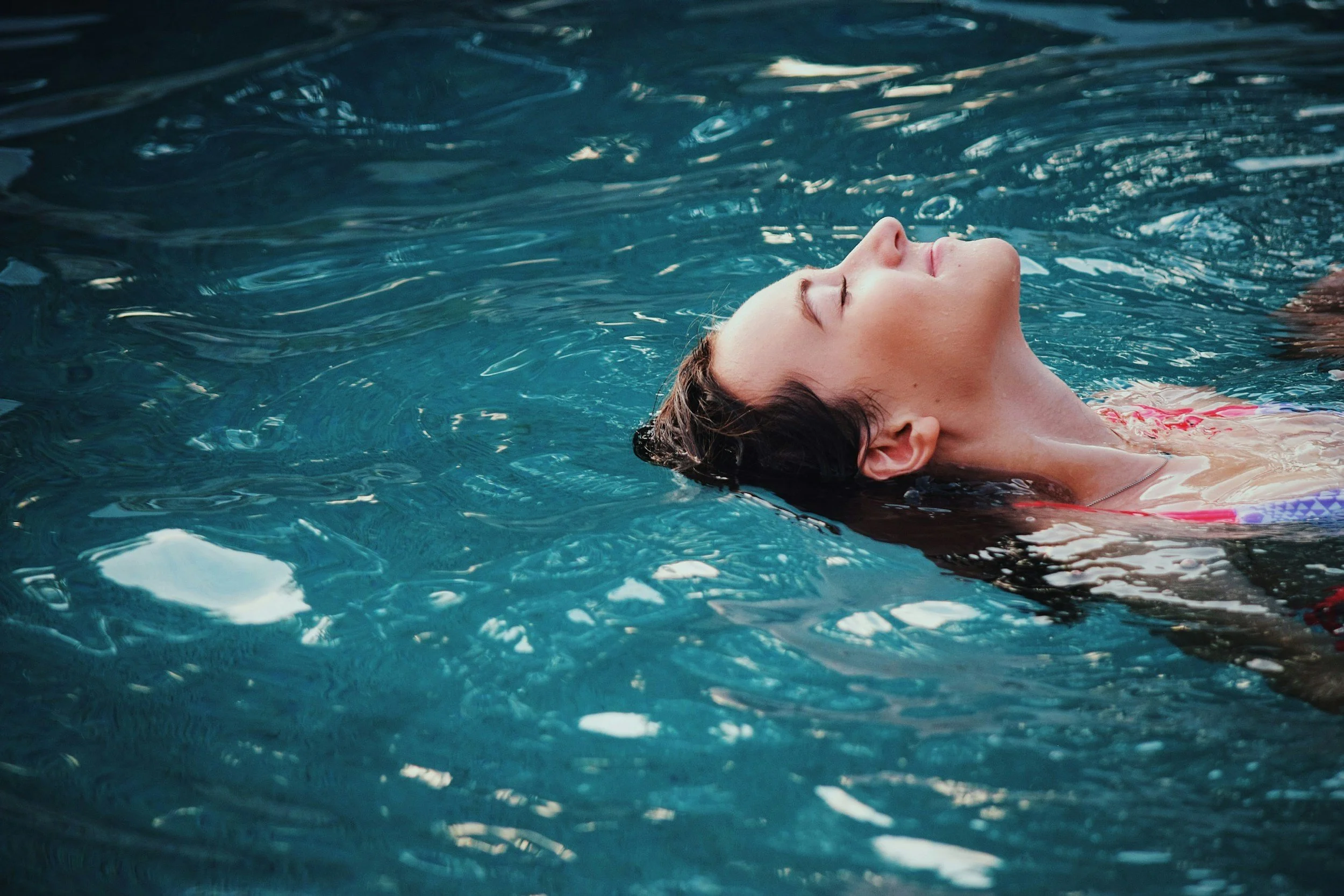
Lately, the pool has been bringing all of this back to the surface, especially as my body shifts into perimenopause. Togs and leotards are not so different. Both leave little to hide. Both ask you to exist in your body without layers, without distraction, without much protection. They invite comparison, even when no one intends it. They make you aware of shape, softness, stretch and space. Those early dance experiences didn’t just teach me how to move. They taught me how to be seen. How to hold myself. This time, though, the pool isn’t about performance, but about presence. It’s about showing up without the expectation to fix or improve anything first. To come as I am and rock it like Nirvana.
Somewhere along the way, we lost the research.
Research into body image rarely makes it into everyday conversations between women. We talk about confidence, fitness, weight and motivation, but far less about the cumulative mental load of monitoring our bodies over decades and how that intersects with isolation, particularly after having children.
Research consistently shows that body dissatisfaction is linked to poorer mental health outcomes for women, including anxiety and depression. These effects don’t stop in adolescence. They often intensify during major life transitions such as pregnancy, birth and early motherhood, when bodies change quickly and visibly, and when identity is already in flux.
Social isolation has also been identified as a significant risk factor for poor mental health in mothers. In Australia, many women describe early motherhood as a period of profound loneliness, despite being constantly needed. Social worlds shrink just as emotional and physical demands expand.
These two things — body image and isolation — don’t operate separately. They compound each other. When connection drops away, self-scrutiny grows louder. When self-scrutiny intensifies, withdrawing can feel safer.
What the research points to as protective isn’t perfection or confidence. It’s connection. Belonging. Environments that reduce comparison and allow bodies to exist without constant evaluation.
That’s why the idea of gathering at a pool feels significant to me. Not as a place to “love your body”, a phrase that can feel like yet another expectation, but as a place to practise something more achievable. Being in your body and not caring. Letting it take up space without apology.
The fact that this pool event welcomes mums and their kids matters. Children learn early by watching. They notice how we talk about ourselves, how we move, what we avoid, what we apologise for. Breaking the cycle doesn’t require speeches. Sometimes it starts with showing up together in ordinary, imperfect bodies and letting that be enough.
Earlier today, I met a woman in the supermarket. She was ninety-one.
Ninety-one.
She was warm, sharp, present, completely herself. I walked away thinking about how many bodies she has lived in across her lifetime. How many phases. How many versions that once felt urgent and all-consuming.
That perspective has stayed with me.
Bodies are not static achievements. They are companions. They change, carry us, and age with us. The question isn’t whether we’ve kept them perfectly. It’s whether we’ve allowed ourselves — and our children — to live fully inside them along the way.
Maybe this pool event is just one small step. Consider it a first step or a gentle interruption. We’re not moving towards loving our bodies all the time, but towards being a little less at war with them…together.
If you can make this Saturday morning, please register. Here are the details:
Date: Saturday, Jan 31st.
Time: 10:30am - 12noon
Where: Olinda Community Pool - 79 Olinda-Monbulk Road, Olinda.
If this piece stirred something and you’d like to explore the research behind it a little more, these studies and reports informed my thinking:
Body image and motherhood: Research shows that body dissatisfaction is linked to poorer mental health outcomes for women, particularly during pregnancy and early motherhood (Silveira, 2015; He, 2025).
Postpartum wellbeing: Studies have identified body image dissatisfaction as a risk factor for postnatal depressive symptoms (Riesco-González, 2022).
Connection as protection: Evidence suggests that supportive, low-comparison environments can play a protective role in maternal mental health (Shen, 2024).
Australian context: Perinatal mental health is recognised as a significant public health issue, with social connection and support identified as key protective factors (World Health Organization, 2022).
Full references are available on request for anyone who would like to dive deeper.