When Every Phone Screams at Once:
A Lesson From the UK for Our Bushfire Season
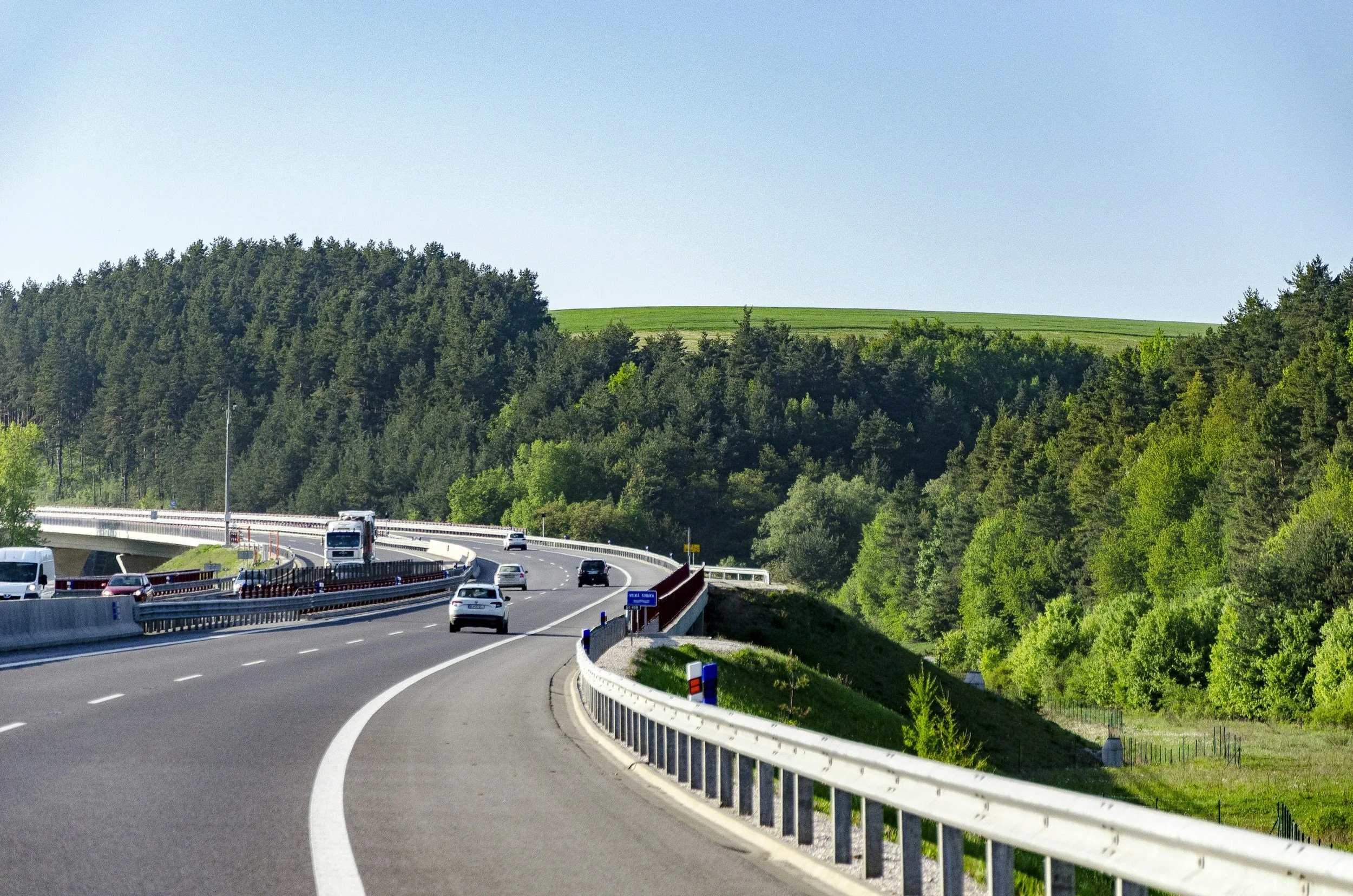
On 14 August, my family was driving on a motorway in the UK after a hefty 27-hour journey from Australia. We were extremely tired and in desperate need of a shower and bed. My hubby was concentrating on the road and getting us to where we needed to be when, suddenly, my phone screamed. Not just my phone, but all our phones produced a piercing sound. We had no idea what it was. With world tensions being so high, I honestly thought we were in imminent danger of attack or, UFO invasion, or, a major road incident like the warnings in Melbourne’s Burnley Tunnel (but without the haunting chimes or calm voice).
At exactly the same moment, everyone on the motorway hit the brakes. It seemed that phones throughout the cars around us had done the same thing. It was one of those moments where you realise something has happened before your brain has had time to work out what it is. We were travelling at UK motorway speeds and suddenly brake lights appeared everywhere. My first thought wasn't bushfire; it was simply, BRAAAKKKEEEE
The message on my phone was a UK Government Emergency Alert warning of a very high risk of wildfires across England and Wales. It had been sent at 7.01pm as the country dealt with record wildfire activity during its fifth heatwave of the year. The previous 24 hours had seen 11 major fire incidents declared and homes destroyed. This wasn't a test. It was a real emergency warning sent to millions of people.
After living in the Dandenong Ranges, receiving ‘pings’ on our VIC Emergency App, and hearing the station fire alarms, wildfire warnings weren't in itself particularly shocking. What shocked me though was our reaction and everyone else’s reaction to this real-life warning, because for a few seconds, the warning designed to keep us safe seemed capable of creating another danger entirely.
Australia has just tested the same technology
Less than three weeks before our experience in the UK, Australia had conducted its first nationwide test of AusAlert, our new cell-broadcast emergency warning system. At 2pm on Monday 27 July, a Critical Alert was sent to compatible mobile devices across Australia. Phones, some tablets and smart watches vibrated and produced a siren-like warning for around 10 seconds. Like the warning we received in Britain, a Critical AusAlert sounds even when a device is set to silent or do not disturb.
The test was technically successful. Around 94 per cent of mobile cells successfully broadcast the alert, exceeding the government's target. Importantly, preliminary monitoring found no reported public-safety incidents attributable to the test, no material changes in driver behaviour and no material increase in Triple Zero calls. NEMA has continued reviewing feedback and results ahead of the system's launch. There were nevertheless plenty of conversations afterwards about phones that did or didn't receive it, devices behaving differently and, importantly, the implications for people who rely on hidden phones for their safety.
AusAlert becomes available for use in real emergencies from 1 October 2026, just as many Victorian communities are turning their attention towards the coming bushfire and severe-weather season. That makes understanding these alerts more than an interesting technological exercise. Very soon, the next time many Australians hear that sound, we may not be forewarned.
Australia's national test was widely publicised beforehand. It happened at a known time, in the middle of the afternoon, and the message clearly stated that no action was required. Our experience in Britain was completely different.
We weren't expecting anything. We didn't know an alert was coming. We were travelling at UK motorway speeds and suddenly phones around us began making a sound specifically designed to demand immediate attention. That difference really matters.
During a planned test, people can intellectually understand that the noise isn't signalling immediate danger. During an actual emergency, the first few seconds involve uncertainty. You hear an alarm before you've read the message. Your brain knows something is wrong before it knows what is wrong.
Sitting on that motorway, blood pumping and now wide awake, made me think about something we don't talk about nearly enough when designing emergency communications: what happens in the first five seconds after someone receives a warning?
There is a difference between what we'd like people to do and what humans actually do when something unexpected happens. We startle and we look towards the noise, reach for phones, we brake hard and ask the person next to us what is happening. We weren’t the only ones. One report collected reactions from motorists saying the alert had caused people to panic on the M61, with vehicles reportedly “swerving all over” and one driver pulling onto the hard shoulder. Another motorist said the alarm almost caused him to swerve off the motorway, while another reported that he “almost crashed the car in confusion.” A driver with three phones sounding simultaneously described the experience as dangerous.
When a cell-broadcast system sends an alert, large numbers of people in an affected area can receive that startling warning at around the same time. That extraordinary reach is one of the technology's greatest strengths, but our experience also made me think much more deeply about how we prepare people to receive it.
Lesson 1: warnings need to account for human behaviour
Perhaps Australia's national test achieved something beyond testing the technology. Millions of Australians have now heard what a Critical AusAlert sounds like. That familiarity could matter and so I hope we have several more tests.
If that sound goes off while we're driving this summer, we need to recognise it without immediately reaching for our phones. If we're somewhere safe, we can stop and read it. If we're driving, our first responsibility remains controlling the vehicle and reading the message when it is safe to do so.
Official AusAlert guidance reflects this, telling people to read an alert when it is safe to do so, tell others nearby, follow its instructions and continue monitoring trusted emergency information sources.
Bushfire preparedness therefore shouldn't only be about preparing your property and knowing your evacuation route. It should include understanding how warnings will reach you and how you will respond when they do.
Families should know what an AusAlert looks and sounds like, what VicEmergency provides and what different warning levels mean. We should think about what we would do if an alert arrived while driving, what our teenagers would do, how an elderly family member might respond and what happens if internet services are unavailable.
The less unfamiliar the warning is, the less thinking we have to do when something actually happens.
Lesson 2: understand what AusAlert can – and can't – do
AusAlert represents a significant change to Australia's emergency warning system. Rather than sending individual SMS messages to phone numbers, it uses cell-broadcast technology through active 4G and 5G mobile networks. A nearby mobile tower broadcasts the warning to compatible devices in the affected area. That means authorities can send information rapidly to large numbers of people without needing to know who they are or their phone numbers. It also means we need to understand its limitations.
Not every device will necessarily receive every warning. Compatibility, software, network connection and location can all matter. Australia's national test reached 94 per cent of mobile cells, which is impressive, but it is also a reminder of one of the oldest rules of emergency communication: never rely on a single source of information.
During a bushfire, AusAlert should become another part of our information network alongside VicEmergency, emergency broadcasters, emergency services and other trusted local sources.
Lesson 3: warnings can create unexpected risks
One of the most important issues raised before Australia's July test had nothing to do with bushfire. For some people experiencing family and domestic violence, a concealed or "safe" phone can form part of their safety plan. An abusive person may have no idea that the second device exists.
A Critical AusAlert sounds even if the device is set to silent or do not disturb, and Critical Alerts cannot simply be disabled in the phone's notification settings. Australian authorities therefore warned people with hidden devices before the July test to switch them off or put them into aeroplane mode and keep them that way for 24 hours.
That was possible because the July alert was a scheduled test, however, a bushfire isn't scheduled. Once AusAlert is operational, people using hidden safety devices will have a more difficult decision to make about whether receiving emergency warnings on that device is appropriate for their circumstances. AusAlert now specifically provides safety advice acknowledging that emergency messages could make concealed devices easier to find.
It is an important reminder that a system designed to protect a whole population can affect individuals very differently. Good emergency planning therefore asks more than whether a warning reaches the maximum possible number of people. It also asks whether some people could unintentionally be put at risk by the way that warning is delivered.
Lesson 4: community networks still matter
Technology is incredibly important during emergencies, but it doesn't replace community. One of the strongest protective factors we have in places like the Dandenong Ranges and Yarra Ranges is each other: the neighbour who checks on the older person living alone, the parent who messages another family, the person who notices smoke before an app notification appears, and the community group that shares verified emergency information rather than rumours.
It is also the friend who says, "You can bring the kids and animals here," or the neighbour who asks whether you've seen the latest warning.
AusAlert itself encourages people who receive an alert to tell family and people nearby. That's a small instruction with enormous significance because emergency information doesn't travel only through telecommunications networks; it travels through human networks. Those networks can reach people formal systems sometimes miss.
Lesson 5: decide what you will do before your phone screams
Perhaps the biggest lesson from that motorway is that an emergency is a terrible time to make your first emergency plan. When the alarm went off, we had no idea what it meant and our brains had to catch up. During a bushfire, those seconds and minutes can matter.
Before this bushfire season really begins, have the conversation about where you will go, when you will leave and what would trigger your decision to leave early. Think about who collects the children, what happens if you're at work, what you'll do with pets, what happens if the power goes out or mobile reception disappears, which information sources you trust and who nearby might need you to check on them.
Now we should add another question to that conversation: what will we do when an AusAlert suddenly sounds on our phones? Australia's July test gave us the opportunity to hear the system in safe circumstances. From October, emergency services will be able to use that same technology to warn communities facing real emergencies.
Just 18 days after Australia's national test, I happened to experience the UK equivalent for real. Sitting on a motorway surrounded by brake lights while phones screamed about wildfire was a powerful demonstration of just how effectively these systems can command our attention. It was also a reminder that technology is only part of emergency preparedness. We need to recognise the warning, understand it, know how to respond safely and appreciate that not everyone receiving it will experience it in the same way.
As we head towards another bushfire season, AusAlert gives Australia an extraordinarily powerful new tool. The challenge for all of us is making sure that when our phones eventually scream for real, we already know what we're going to do next.