March
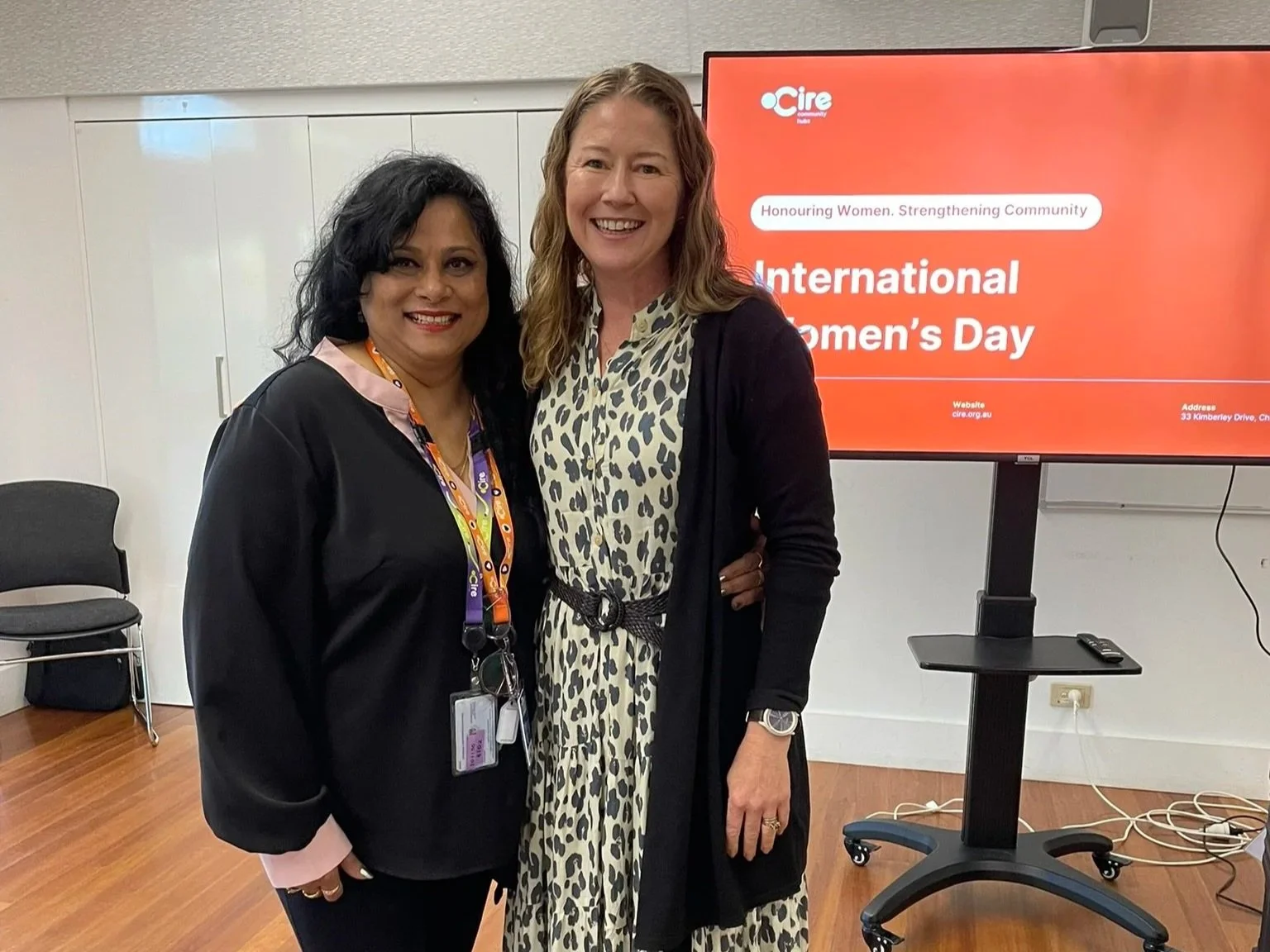
Breakfast event for International Women’s Day at CIRE
The Work Between the Moments
March felt full both in a busy, ticking-things-off kind of way, but in an emotional sense with global stressors clashing with truly meaningful events all at once. So much has happened. I’ll tell you all about it.
March always means International Women's Day celebrations. IWD always carries a certain weight for me, offering a moment to pause, reflect, and contribute to broader conversations about women’s experiences. This year, I had the privilege of speaking at two very different events, each with its own audience and tone, but both grounded in the same underlying purpose.
In one space, I spoke about the transition periods of motherhood, not just the early years, but the many points of change that quietly reshape identity, confidence, and connection over time. These shifts can come when children start school, move into high school, finish school, or leave home altogether, and they can also emerge when a mother returns to work, changes roles, or steps away from the workforce. Each of these moments can create a subtle but significant sense of vulnerability, where routines change, social networks shift, and a woman can find herself questioning where she now fits. This risk of isolation is being further amplified by rising fuel costs, which are making it harder for many to physically access community, particularly in areas like the hills where distance and transport already present barriers. I spoke about how Mums of the Hills exists within this space, not as a “nice to have,” but as something essential, providing a place where connection is rebuilt, confidence begins to return, and women can find both familiarity and new identity as they navigate these transitions.
In the other room, the conversation shifted towards the idea of giving to gain, but not in the way people often expect. For mums, giving often looks like volunteering or prioritising others first. While realising the point of the theme was to give more to gain more, I stressed that sometimes the most meaningful form of giving is giving to yourself. Whether that’s time, space, or permission to step back into your own needs, when a mum invests in herself, in her wellbeing, her confidence and her connections, the return extends far beyond her as an individual. It flows into her family, her work, and her wider community, often creating impact for people she may never even meet.
Amidst these conversations, something we have been working towards for years quietly came to fruition, with Mums of the Hills achieving Deductible Gift Recipient status. This means that every donation over $2 can be tax deductible. It is difficult to fully capture what this represents without acknowledging the long and complex journey to get there, including the questions, the pushback, and the need to continually demonstrate that the impact of isolation on mothers, and the importance of connection in addressing it, is both real and significant. This milestone was not simply administrative; it marked a moment of recognition that this work matters, that supporting mothers is not peripheral but foundational, and that community-led, place-based connection plays a critical role in mental health, prevention, and recovery.
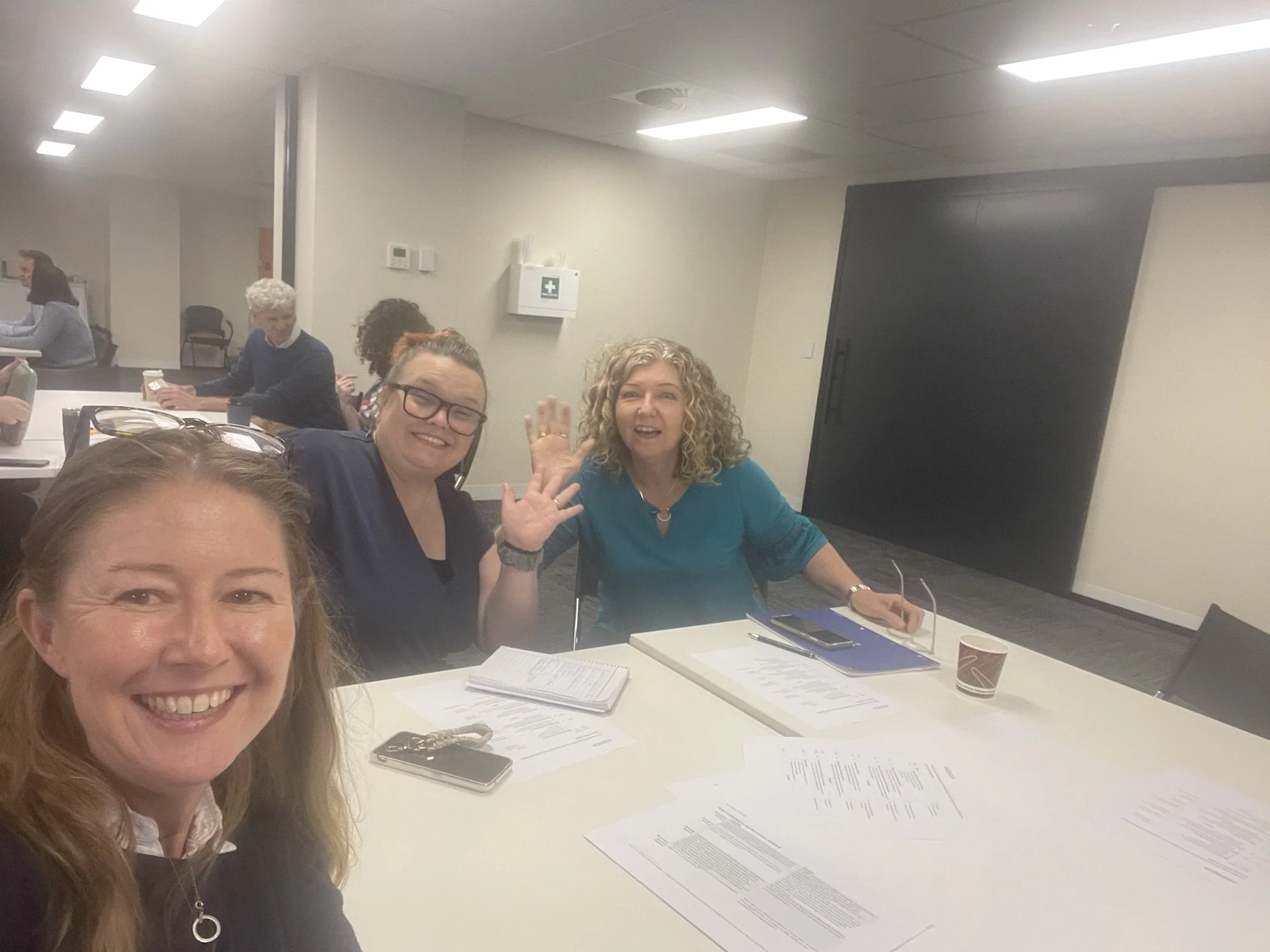
Great to see Linda Snell at the AIDR/Red Cross workshop
March also brought a very different kind of conversation when I was invited into a roundtable/workshop with the Australian Institute for Disaster Resilience and the Australian Red Cross. The focus of this discussion was on concurrent, cascading and compound disasters, a concept that reflects the reality many communities are already experiencing. Rather than a single event followed by recovery, communities are now facing multiple, overlapping challenges, such as bushfires followed by storms, economic pressures layered onto recovery efforts, and ongoing mental health impacts that do not resolve between events.
This was not a presentation but an interactive working session that brought together people with lived experience and deep knowledge of disaster recovery. It created space for honest discussion about what recovery actually looks like in practice, particularly in situations where challenges are ongoing and interconnected. The goal was to help shape guidance for the Community Recovery Handbook so that it better reflects the realities communities face and provides more practical, grounded support for navigating what is increasingly becoming the norm.
While these experiences might appear separate on the surface, they were deeply connected in what they revealed. Each conversation, in its own way, reinforced the understanding that connection is not a luxury but a form of infrastructure that underpins resilience. Whether it is a mum navigating a shift in identity, a community recovering from disaster, or individuals managing ongoing uncertainty, the presence of connection fundamentally changes outcomes.
There is often an assumption that resilience is about individual strength, but what became clear across these spaces is that resilience is built through connection, through the quiet, consistent and often invisible work of showing up, creating spaces where people feel seen, and ensuring that no one is left to navigate complex challenges alone.
Looking ahead to April, this conversation continues to build, with President Belinda Young set to join a panel hosted by Amplify at the launch of their housing policy. In front of an audience of industry leaders, decision-makers and influencers, the discussion will focus on the housing crisis and the lived experiences of those in the hills, bringing community voice into spaces where policy and investment decisions are shaped. We’re also working hard to put supports in place as the global pressures wreak havoc for local families.
What sits underneath all of this work, across both months, is a consistent thread, which is that the experiences of everyday people, particularly mothers navigating change, isolation, and uncertainty, must be part of the conversations that shape systems, policy, and recovery. When those voices are included, the outcomes are more grounded, more responsive, and ultimately more effective, and when they are not, we risk building solutions that miss the very people they are intended to support.
March was a reminder of how far this work has come, and April signals where it needs to go next, which is further into the rooms where decisions are made, carrying with it the lived realities of the community, and continuing to ensure that connection remains at the centre of how we respond to both personal and collective challenges.